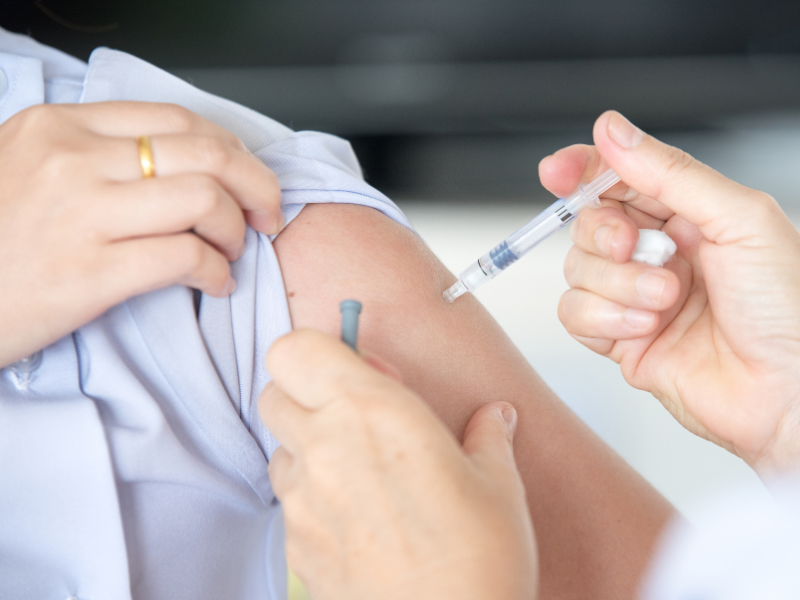
Diphtheria, Tetanus & Polio

Our teams are professionally trained to provide you with the highest standard of treatments and services, so every time you visit, you leave with a positive experience.


Diphtheria, Tetanus & Polio Vaccine | DTP Booster | Allied Pharmacies

The diphtheria, tetanus and polio (DTP) vaccine is a combined booster vaccine that protects against three serious infectious diseases. According to the NHS, most people in the UK receive childhood vaccinations against these diseases, but booster doses are recommended before travelling to many international destinations or if your vaccination history is incomplete.

At Allied Pharmacies, our trained pharmacists can check your vaccination history, advise whether a booster is needed and administer the vaccine during a single convenient appointment — no GP referral required.

Use the postcode search below to find your nearest Allied Pharmacy offering the DTP vaccine.


What Are Diphtheria, Tetanus and Polio?

These are three separate but serious infections:

  • Diphtheria — a bacterial infection that affects the throat and airways. According to the NHS, it can cause breathing difficulties and in severe cases can be fatal. It spreads through coughs, sneezes and close contact
  • Tetanus — a serious bacterial infection caused by bacteria found in soil and animal manure. It enters the body through cuts and wounds and affects the nervous system, causing painful muscle contractions and spasms. Tetanus can be life-threatening
  • Polio (poliomyelitis) — a viral infection that attacks the nervous system and can cause paralysis. Thanks to widespread vaccination, polio has been eliminated from most countries, but it still exists in some parts of the world

All three diseases are preventable through vaccination. The combined DTP vaccine provides protection against all three in a single injection.


Who Needs the DTP Vaccine?

In the UK, children receive DTP vaccinations as part of the routine NHS schedule at 8, 12 and 16 weeks old, with boosters at 3 years 4 months and again at 14 years old. This provides good protection for most people.

However, a DTP booster may be recommended if:

  • You are travelling abroad and have not had all 5 doses of the vaccine (or a booster in the last 10 years)
  • You are visiting a country where diphtheria, tetanus or polio is still common
  • You did not complete your childhood vaccinations
  • You are unsure of your vaccination history
  • You work in an occupation with higher infection risk, such as healthcare or agriculture

Your pharmacist can check your vaccination records and advise whether a booster is needed.

Many adults in the UK are unsure of their vaccination history, particularly if they moved to the UK from another country or if their childhood records have been lost. If you are not certain whether you have had all five doses of the DTP vaccine, do not worry — your pharmacist can help. In most cases, it is safe to receive a booster even if you are unsure of your previous doses, and your pharmacist will record the vaccination so you have a clear record going forward. It is always better to be over-protected than under-protected, especially when travelling to areas where these diseases are still common.


DTP Vaccine Schedule

If you have completed the full 5-dose NHS childhood course, you are generally well protected and may only need a booster if travelling to a higher-risk area and it has been more than 10 years since your last dose.

If you have not completed the full course, your pharmacist will advise on how many additional doses you need. The vaccine is given as a single injection in the upper arm.


Symptoms of Diphtheria, Tetanus and Polio

Each of the three diseases protected by the DTP vaccine has distinct symptoms:

Diphtheria symptoms include a thick grey-white coating at the back of the throat, a high temperature, sore throat, swollen glands in the neck and difficulty breathing or swallowing. According to the NHS, diphtheria can cause life-threatening breathing problems and damage to the heart and nervous system if not treated promptly.

Tetanus symptoms include stiffness in the jaw muscles (lockjaw), painful muscle spasms often starting in the jaw and neck before spreading to the rest of the body, difficulty swallowing, a high temperature and sweating. The NHS warns that tetanus is a medical emergency — without treatment it can cause breathing failure.

Polio can cause flu-like symptoms initially, but in severe cases it attacks the nervous system and can cause permanent paralysis of the legs, arms or breathing muscles. Thanks to widespread vaccination, polio has been eliminated from the UK and most countries worldwide, but it remains a risk in a small number of regions.


Travel Destinations Where a DTP Booster May Be Needed

A DTP booster is commonly recommended before travelling to regions where these diseases are still present or where healthcare access is limited. You should consider a booster if visiting:

  • Sub-Saharan Africa — diphtheria and tetanus remain a risk in many countries
  • South and Southeast Asia — including India, Pakistan, Bangladesh, Indonesia and the Philippines
  • Parts of the Middle East — particularly areas affected by conflict where vaccination programmes have been disrupted
  • Afghanistan and Pakistan — the last two countries where wild poliovirus still circulates
  • Central and South America — tetanus risk in rural areas with limited healthcare

Even if your destination is not listed above, a booster may still be recommended if it has been more than 10 years since your last dose. Your pharmacist will check your vaccination history and advise accordingly.


Is the DTP Vaccine Safe in Pregnancy?

Yes. The NHS recommends that pregnant women receive a whooping cough (pertussis) vaccine during each pregnancy, which is given as a combined vaccine that also includes protection against diphtheria, tetanus and polio. This is usually offered between 16 and 32 weeks of pregnancy.

Vaccinating during pregnancy helps protect your baby during the first few weeks of life before they are old enough to receive their own vaccinations. If you are pregnant and planning international travel, speak to your pharmacist about which vaccines are safe and recommended.


DTP Vaccine Side Effects

The DTP vaccine is very safe. Like all vaccines, it can cause mild side effects, which the NHS confirms usually settle within a few days:

  • Soreness, redness or swelling at the injection site
  • A mild high temperature
  • Tiredness or feeling generally unwell
  • Headache or muscle aches

Serious side effects are extremely rare.


How the DTP Vaccination Service Works

Getting your DTP booster at Allied Pharmacies is quick and convenient.

  • Book your appointment — contact your nearest Allied Pharmacy or book online
  • Consultation — your pharmacist will review your vaccination history and travel plans
  • Vaccination — the vaccine is given as a single injection in the upper arm
  • Vaccination record — your booster will be recorded for your future reference

We recommend booking your travel health consultation at least 4 to 6 weeks before travel to allow time for this and any other vaccinations you may need.


Why Choose Allied Pharmacies?

  • No GP referral required
  • Trained and experienced pharmacist vaccinators
  • Convenient high street locations
  • Fast appointments, often available within days
  • Comprehensive travel health consultations


Related Travel Health Services

Visit our full list of pharmacy services.


Find a DTP Vaccine Near You

DTP booster vaccinations and travel health consultations are available at participating Allied Pharmacies across the UK. Use the postcode search above to find your nearest pharmacy and book today.

For more information, visit the NHS diphtheria page.

'.

Diphtheria, Tetanus & Polio FAQ’s

Keep up to date and win prizes every month!

Join the Allied Pharmacies email list for updates on services, monthly prizes and health tips!