When to book chlamydia treatment
Most people with chlamydia have no symptoms at all, so book a confidential consultation if you have had unprotected sex with a new partner, a partner has told you they have chlamydia, or you are planning a pregnancy.
When symptoms do appear, they usually start 1 week to several months after infection.
In women:
- Unusual vaginal discharge
- Bleeding between periods or after sex
- Pain or burning when urinating
- Pain in the lower abdomen, particularly during sex
In men:
- White, cloudy or watery discharge from the penis
- Burning or itching around the opening of the penis
- Pain or swelling in the testicles
- Pain or burning when urinating
Chlamydia can also affect the rectum (pain, discharge or bleeding), throat or eyes, depending on how it was transmitted.
What is chlamydia?
Chlamydia is the most common sexually transmitted infection in the UK, caused by the bacterium Chlamydia trachomatis. It spreads through unprotected vaginal, anal or oral sex and can pass from mother to baby during childbirth. It is most common in sexually active people under 25, and is easily treated when caught early.
Complications of untreated chlamydia
- Pelvic inflammatory disease in women, which can cause infertility, chronic pelvic pain or ectopic pregnancy
- Epididymitis in men, a painful infection of the tubes carrying sperm that can affect fertility
- Reactive arthritis, painful inflammation of the joints
- Pregnancy complications, including premature birth and eye infections or pneumonia in the baby
Testing and treatment
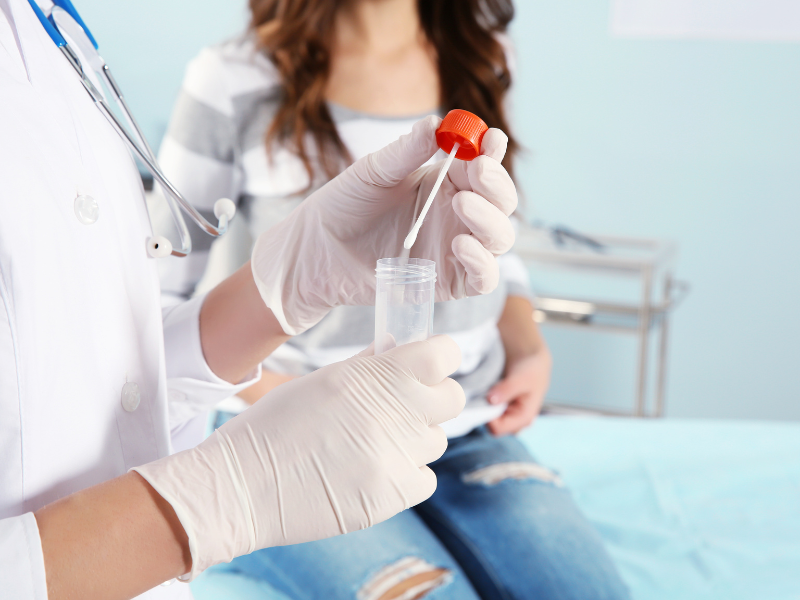
Testing is quick and painless, using a urine sample or a swab. You can test at a pharmacy, a sexual health (GUM) clinic, your GP surgery, or with a self-test kit. Free kits are available for under 25s through the NHS chlamydia screening programme.
Chlamydia is treated with antibiotics, either a single dose or a course lasting 7 to 14 days. Treatment cures most people. Avoid sex until you and your partner have both finished treatment, get retested afterwards to confirm the infection has cleared, and make sure recent partners are tested and treated even if they have no symptoms. Some sexual health clinics offer anonymous partner notification on your behalf.
Prevention and common myths
Use condoms every time you have vaginal or anal sex, use a condom or dental dam for oral sex, do not share sex toys, and test regularly with a new partner.
You cannot catch chlamydia from toilet seats, swimming pools or towels. A partner with no symptoms can still pass it on. Previous treatment does not make you immune, and the infection does not clear on its own without antibiotics.
Find chlamydia treatment near you
Private consultation room, assessment, same-visit antibiotic treatment where appropriate, partner advice and follow-up guidance. No GP referral needed, no long wait and a non-judgmental service. Use the postcode search above to find your nearest Allied Pharmacy.