Head Lice Treatment
Our teams are professionally trained to provide you with the highest standard of treatments and services, so every time you visit, you leave with a positive experience.
Head lice are tiny insects that live on the scalp and are extremely common, particularly among school-age children. While head lice are not dangerous and do not spread disease, they can cause persistent itching and discomfort that affects sleep and daily life. At Allied Pharmacies, our pharmacists provide expert advice on detecting and treating head lice, along with a range of effective over-the-counter treatments to help you and your family get rid of head lice quickly and easily.
Head lice are small, wingless insects that live close to the scalp and feed on blood. According to the NHS, head lice are very common and are not a sign of poor hygiene. They are spread through direct head-to-head contact and cannot fly, jump, or swim. Lice lay eggs, known as nits, which attach firmly to the hair close to the scalp. Nits are very small, oval-shaped, and can be white, brown, or yellow in colour.
Head lice affect people of all ages but are most common in children aged four to eleven. They can be difficult to spot as they move quickly through the hair, and many people do not realise they have head lice until they notice itching, which can take several weeks to develop after the initial infestation.
The most common signs of a head lice infestation include:
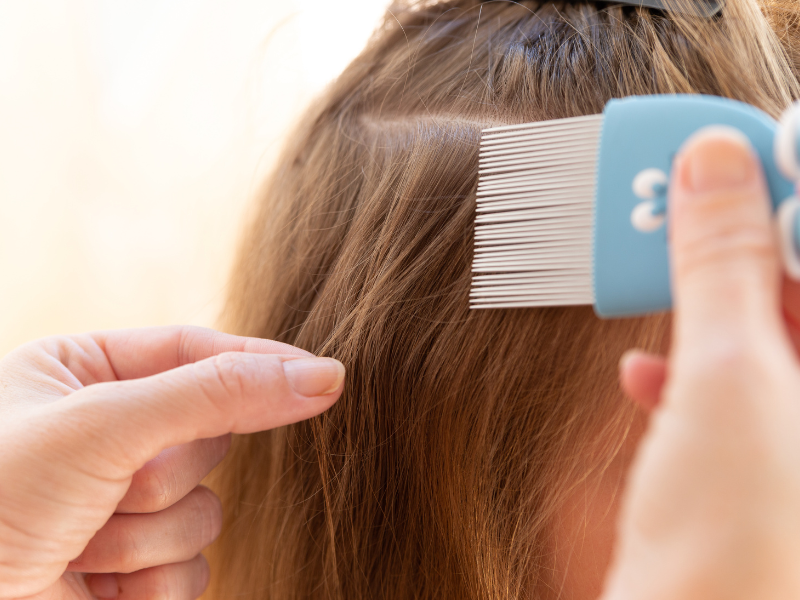
The best way to confirm a head lice infestation is to use a fine-toothed detection comb on wet, conditioned hair. Our pharmacists can show you the correct technique and provide the right tools to detect head lice effectively.
There are two main approaches to treating head lice: medicated treatments and wet combing. Both methods are effective when used correctly, and our pharmacists can help you choose the best option for your situation.
It is important to treat the whole family at the same time if more than one person is affected, and to check all household members for lice before starting treatment. Our pharmacists can advise on the most appropriate product and guide you through the treatment process step by step.
While it is difficult to completely prevent head lice, the following measures can help reduce the risk of infestation:
There is no evidence that head lice repellent sprays or tea tree oil products prevent infestation, though some parents find them helpful as part of a regular checking routine.
There are many misconceptions about head lice that can cause unnecessary worry. Head lice are not a sign of dirty hair — in fact, lice have no preference for clean or dirty hair. They cannot jump or fly between people and are only spread through sustained head-to-head contact. Washing bedding and clothing at high temperatures is not necessary, as head lice cannot survive for long away from the scalp. Our pharmacists can help separate fact from fiction and provide clear, evidence-based advice on managing head lice.
Head lice outbreaks are very common in schools and nurseries, and receiving a letter about head lice in your child's class can be worrying. However, there is no need to keep your child off school if they have head lice, as long as treatment has started. The NHS advises that children with head lice can continue to attend school while being treated. The key is to start treatment promptly and check all family members so the infestation can be cleared as quickly as possible.
If your child keeps getting head lice despite treatment, it may be because they are being re-infested through contact with someone who has untreated lice. In these cases, it can be helpful to let other parents know so that all affected families can treat at the same time. Our pharmacists can provide guidance on managing recurring infestations and recommend the most effective treatment approach for your family.
With so many head lice products available, it can be difficult to know which one to choose. Our pharmacists can help you select the most appropriate treatment based on your preferences and circumstances. Dimeticone-based products are generally recommended as a first-line treatment as they work physically rather than chemically, meaning head lice cannot develop resistance to them. If you prefer a non-chemical approach, wet combing with a good quality detection comb and plenty of conditioner is an effective alternative that avoids the use of any products on the hair.
Most head lice infestations can be treated successfully at home with pharmacy products. However, you should speak to a pharmacist or GP if treatment does not appear to be working after two full courses, if the scalp becomes infected due to scratching, or if you are unsure whether you or your child has head lice. Our pharmacists can re-assess the situation and recommend alternative treatments if needed.
Getting help with head lice at Allied Pharmacies is quick and easy. Visit any of our branches and speak to a pharmacist. No appointment is needed. Our pharmacist will confirm whether head lice are present, recommend the most suitable treatment, demonstrate proper combing techniques, and provide advice on preventing re-infestation. We stock a comprehensive range of head lice treatments including medicated lotions, sprays, and detection combs.
Allied Pharmacies provides friendly, professional head lice treatment advice with:
You may also be interested in these related services at Allied Pharmacies:
Visit your nearest Allied Pharmacies branch for expert head lice advice and effective treatments. Our pharmacists are here to help your family tackle head lice quickly and confidently. For more information, visit the NHS head lice guide.
Join the Allied Pharmacies email list for updates on services, monthly prizes and health tips!